Sciatica pain down your leg? Start by understanding why.
Orthiva — a personalised programme for sciatica and nerve-related back pain
Physician-led Ayurvedic care for the radiating leg pain, tingling and numbness of sciatica. It begins with an Orthiva Assessment to find what is compressing or irritating the nerve — then a programme built around your spine.
16,000+ patients · 4.9 Google · 18 years of clinical practice · Sector 51, Gurgaon
16,000+Patients Treated
4.9Google Rating
18 yrsClinical Practice
Doctor-ledEvery Programme
Doctor-led CarePersonalised ProgramsLong-term Follow-upEvidence-informed Practice
Common symptoms
How sciatica shows up
Sciatica is the pain of an irritated sciatic nerve — usually felt down one leg. Most people notice a mix of these, often triggered by sitting, bending or coughing.
•Pain that radiates from the lower back into the buttock and down one leg
•A sharp, burning or electric-shock-like pain rather than a dull ache
•Tingling or "pins and needles" in the leg or foot
•Numbness along the back or side of the leg
•Pain that worsens when sitting, standing up, bending or coughing
•Weakness or a feeling of heaviness in the affected leg
•Usually one-sided — one leg rather than both
•Relief in certain positions, such as lying down
Who it affects
Who tends to experience it
Sciatica is a symptom of nerve irritation in the lower spine — and it can be improved once the cause is understood. It tends to affect:
Adults between 30 and 60, when disc problems are most common
People who sit for long hours or drive a great deal
Those whose work involves lifting, twisting or heavy effort
Anyone carrying extra weight, which loads the lower spine
People with a disc bulge, herniation or lumbar spondylosis
People with weak core and back muscles
Why it happens
What is behind the pain
Sciatica is not a disease in itself — it is the leg pain that results when the sciatic nerve is compressed or irritated in the lower spine. Finding what is pressing on the nerve is the first step.
A bulging or herniated disc
The most common cause — a disc in the lower spine presses on a nerve root, which the body feels as pain travelling down the leg.
Narrowing and spinal changes
Age-related narrowing of the spaces the nerves pass through (or spondylosis) can crowd and irritate the nerve, especially with certain movements.
Muscle tightness and nerve irritation
Tight or overloaded muscles deep in the buttock and back can add to the irritation, keeping the nerve sensitised and the pain going.
The options
Common ways to treat it
There are several ways to approach sciatica. Each has a role, and the right mix depends on what is irritating the nerve. Orthiva is one path — and part of the Assessment is helping you understand where it fits alongside the others.
Lifestyle & movement
Specific stretches, gentle activity and changes to how you sit and lift take pressure off the nerve. These help many people and are a foundation of almost any plan.
Medicines
Pain-relieving, anti-inflammatory or nerve-pain medication can settle symptoms, especially in an acute flare. They are useful for relief, and are prescribed and monitored by your doctor.
Physiotherapy
Structured exercise, nerve-mobilising movements and manual therapy ease the irritation and rebuild support. Physiotherapy is valuable and often works well alongside other care.
Surgery
When a nerve is severely compressed, or there is progressive weakness, surgery can be the right choice. Because it is a major step, many people prefer to explore non-surgical care first — and your doctor will tell you honestly if surgery is what your case needs.
Orthiva
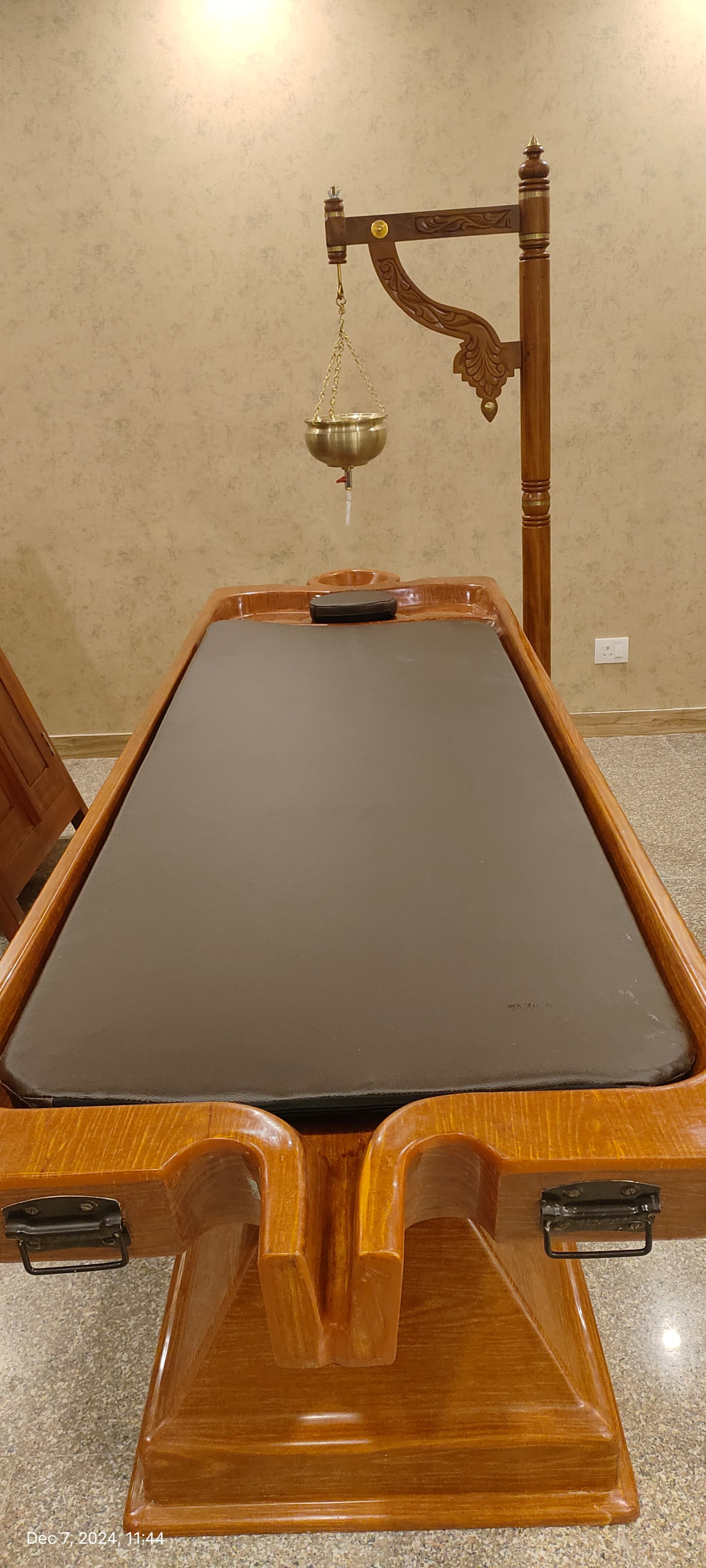
A physician-led Ayurvedic programme that begins by identifying what is irritating the nerve, then combines classical therapy, medicines and lifestyle guidance to calm the pain and restore movement — personalised to your spine, and recommended only after an assessment.
How we approach treatment
Principles that guide care
A few principles guide how chronic joint and spine conditions are approached — general ideas, not a specific plan. Your own plan is always decided after an assessment.
Pain is usually multifactorial
Chronic pain rarely has a single cause. Structure, inflammation, muscle support, load and lifestyle often act together — so care usually addresses several at once.
Movement generally supports recovery
For most chronic conditions, the right guided movement helps more than prolonged rest. What is right, and when, is judged for your case.
Recovery is progressive
Improvement tends to come in stages — settling symptoms, rebuilding strength and range, then protecting the gains. It is gradual, not immediate.
Lifestyle influences outcomes
Daily load, activity, weight, sleep and diet all affect a joint or spine. Small, sustainable changes often make a real difference over time.
Care is individualised
There is no one-size-fits-all plan. What helps you depends on your cause, severity and goals — which is exactly why the assessment comes first.
Why Orthiva
Why patients choose Orthiva
Orthiva is not against any other form of care. It simply starts in a different place — with the cause of your pain, not just the pain itself.
It starts with the cause
Every programme begins with an Orthiva Assessment that looks for what is actually driving your pain — not just where it hurts.
Physician-led throughout
You are assessed and treated by our qualified Ayurveda doctors, who examine you, read your reports and stay with your case.
A personalised programme
Nothing is a fixed package. What your programme includes is decided for your condition, your history and your goals.
Non-surgical and non-invasive
For many chronic joint and spine conditions, a structured programme can improve pain and movement without surgery.
Evidence-informed care
Classical Ayurvedic therapy, chosen with an eye on the published clinical research and measured against recognised scores.
Structured follow-up
Progress is reviewed through the programme, and the plan is adjusted to how your body responds.
Assessment first
Start with an Orthiva Assessment
The same sciatica can have very different causes. So Orthiva never starts with a treatment — it starts with understanding. A programme is recommended only after a physician-led assessment of what is driving your pain.
By the end of your assessment you will understand:
Why your symptoms may be persisting
A clear explanation of what is driving your pain.
What may be contributing to your condition
The factors — physical and lifestyle — behind the problem.
Whether Orthiva is appropriate for you
An honest view of whether this is the right path for your case.
What realistic recovery may look like
A grounded picture of what recovery could involve — no over-promising.
Understand your condition before choosing treatment
The Orthiva Assessment is the starting point — a structured, physician-led evaluation of your condition, and whether an Orthiva programme is right for you.
Programmes are recommended after your Orthiva Assessment, never chosen from a menu. What a programme includes is decided by your doctor, for your condition — there is no fixed package.
Evidence-informed care
What the research shows
The therapies and formulations used for the spine in an Orthiva programme have been studied in peer-reviewed clinical research — including randomized controlled trials — using the same measures modern medicine uses for the back: the Oswestry Disability Index (ODI) and the Visual Analog Scale (VAS) for pain.
Classical Ayurvedic Basti therapy for the lumbar spine (Eranda Muladi Yapana Basti) evaluated in lumbar spondylosis, with improvement in pain and mobility.[5]
Yoga combined with add-on Kati Basti for chronic low back pain, studied in a randomized controlled trial with improvement in pain and disability.[6]
Because sciatica most often arises from the lower spine, these lumbar-spine therapies are the ones used to address the nerve irritation behind the leg pain — classical Basti-based care aims to calm that irritation while movement is restored.[5][6]
View all references
Hall J, et al. Change in knee structure and tibiofemoral joint space width: a 5-year longitudinal study. BMC Musculoskelet Disord, 2016. View source
Beattie KA, et al. Minimum joint space width and tibial cartilage morphology in healthy knees. BMC Musculoskelet Disord, 2008. View source
Comparative study of Janu Basti & Matra Basti with Sahachara Taila + Adityapaka Guggulu, knee osteoarthritis. AYU, 2023 (NIA-funded).
Janu Basti with / without Upanaha in Janu Sandhigata Vata (knee osteoarthritis). 2024.
Eranda Muladi Yapana Basti in Kati Graha (Lumbar Spondylosis). AYU. View source
Yoga with add-on Kati Basti for chronic low back pain: a randomized controlled trial. View source
Boswellia serrata (BOSMAX) in early knee osteoarthritis — randomized controlled trial. 2025. View source
Triphala Kashaya vs Allopurinol in Vatarakta (Gout). J Prev Med Holist Health.
Multimodal Ayurveda for Knee Osteoarthritis: Protocol for an Open-Label Randomized Controlled Trial. JMIR Res Protoc, 2025. CTRI/2022/05/042792. View source
Some widely-held beliefs about pain and recovery can point people the wrong way. Here is a calmer, more accurate view — general education, not advice for your specific case.
ActuallyNot always. Pain is a signal that something needs attention, but its intensity does not always match the amount of harm. Chronic pain can persist even when tissues are settling — which is why the cause matters more than the loudness of the alarm.
ActuallyFor many chronic joint and spine conditions, prolonged rest can stiffen and weaken the area. The right, guided movement is often part of recovery. When rest is genuinely needed, and for how long, is a clinical judgement — not a default.
ActuallyImaging is useful, but findings do not always match symptoms — many people with normal scans have pain, and many with changes on a scan have none. Scans inform the picture; they rarely tell the whole story on their own.
ActuallyChronic conditions usually improve gradually, in stages, not overnight. Anyone promising an instant fix is over-promising. Honest care sets realistic expectations and reviews progress over time.
ActuallyFor many chronic conditions, a structured, physician-led, non-surgical programme can meaningfully reduce pain and improve movement. Where surgery is the better option, honest care says so — the two are not the only choices.
Your Orthiva doctors
Physician-led, start to finish
Your assessment and programme are led by our qualified Ayurveda physicians — Dr. Era Ayurveda operates as a team, so care never depends on a single doctor.
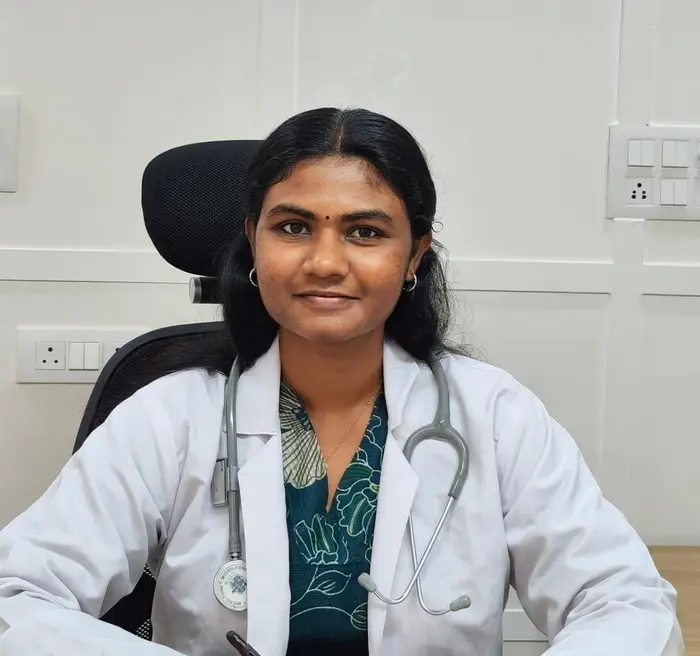
Dr. Era Bakshi Sharma
Founder & Senior Ayurvedic Physician
18 years of clinical practice
Senior Ayurvedic physician with 18 years of clinical practice, treating chronic joint and spine conditions through classical Ayurveda. Under her clinical direction, the team has treated over 16,000 patients — with a consistent focus on restoring movement and function.
18 years of practiceRoot-cause diagnosis16,000+ patients
Dr. Rajalakshmi
Senior Ayurvedic Physician
8 years of practice · Kerala-trained
Ayurvedic physician with 8 years of clinical practice, including 6 years in Kerala — the home of classical Ayurveda. Trained at Government Ayurveda College, Kannur, with a clinical focus that includes joint and orthopaedic conditions.
Govt Ayurveda College, KannurKerala-trained8 years of practice
Orthiva is built for chronic, ongoing conditions. It is not the right starting point for everyone — and we would rather say so, and point you toward the right care.
Suitable
Radiating leg pain, tingling or numbness lasting more than a few weeks
Sciatica from a disc bulge or lumbar spondylosis
Pain that has not settled with rest or painkillers
Recurring sciatic flares
Wanting to explore non-surgical options before considering surgery
Not suitable
Loss of bladder or bowel control, or numbness around the groin (needs emergency care)
Rapidly worsening weakness, or a foot that drags (foot drop)
A suspected spinal fracture or a major acute injury
Most sciatica improves without surgery. A structured, physician-led programme can calm the nerve irritation and restore movement in many cases — which is why non-surgical care is usually explored first. Whether it suits your case is what the Orthiva Assessment is for, and where surgery is the better option our doctors will tell you honestly.
Back pain is felt in the back itself; sciatica is pain that travels from the lower back down the leg, because a nerve is being irritated. The two often occur together, and the assessment looks at both the back and the nerve.
Rarely — but seek urgent medical care if you lose control of your bladder or bowel, develop numbness around the groin or inner thighs, or notice rapidly worsening weakness in the leg or foot. These are signs that need immediate attention, not an assessment.
It varies with the cause and how long the nerve has been irritated. Many people notice a change over the first few weeks, but timelines differ from person to person — progress is measured through the programme, and we make no guarantees of a specific result.
Yes. Orthiva is physician-led — you are assessed and treated by one of our doctors, who examines you, reviews your reports and explains what they find.
Yes. Please do not stop any prescribed medication on your own. Any change to your medication is a decision for you and your treating doctor.
No. Whether any particular therapy is appropriate is decided only after your assessment, and only if it suits your case. The assessment comes first; recommendations follow from it.
If you have an MRI, X-ray or recent blood reports, please bring them — they help our doctors understand your condition. If you do not, your doctor will advise whether any imaging is needed after examining you.
Medical disclaimer
Medical disclaimer
This page is educational and does not provide a diagnosis, a treatment plan, or medical advice for your individual case. It does not replace a consultation with a qualified doctor. A programme is only ever recommended after a physician-led Orthiva Assessment. Please do not stop or change any prescribed medication on your own, and seek prompt in-person care for any urgent symptom.
Understand your sciatica before choosing treatment
Book an Orthiva Assessment for a clear, physician-led picture of what is irritating your sciatic nerve — and whether an Orthiva programme is right for you.
Disclaimer: Treatments are doctor-prescribed and outcome-tracked. Results vary by individual. Any change to existing medication occurs only under doctor supervision.